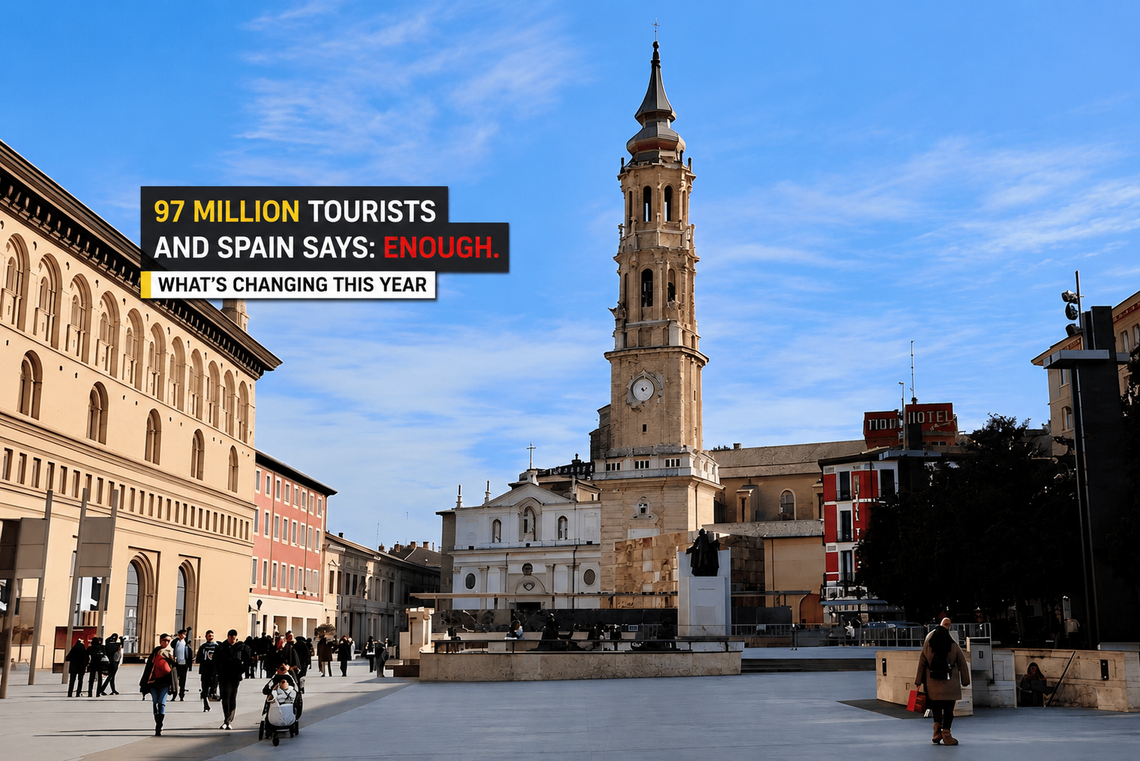
Spain just had its biggest tourism year on record. Ninety-seven million foreign visitors arrived in 2025, spending over $158 billion and keeping the economy humming. On paper, that’s a win. On the ground in Barcelona, Mallorca, and the Canary Islands, residents are done celebrating.
Anti-tourism graffiti has returned to Palma’s city center. Barcelona’s newly appointed commissioner for sustainable tourism has said publicly: “We don’t want more tourists — not even one more.” New taxes are going up. Short-term rental licenses are being pulled. The rules Americans need to know before booking a flight to Madrid or Seville are genuinely different from what they were two years ago.
This article breaks down exactly what’s changing — the new taxes, the entry rules, the cities hitting a wall — and what it means if you’re planning a trip to Spain in 2025 or 2026. No filler, no PR spin. Just what’s actually happening and what you need to do about it.
Spain tourism news today: the numbers behind the backlash
Spain is the second most visited country in the world. Tourism accounts for 12.6% of its GDP and supports more than 2.7 million jobs. Those numbers sound like a success story until you factor in what mass tourism does to a city at street level.
Housing costs in Barcelona have risen sharply as short-term rentals displace long-term tenants. Historic districts in Málaga and San Sebastián struggle with seasonal overcrowding. In the Balearic Islands — Mallorca, Menorca, Ibiza — residents have held repeated mass protests demanding government action.
The government listened. What’s being rolled out now is the most comprehensive set of tourism restrictions Spain has introduced in decades.
New tourist taxes: what American visitors will pay in 2026
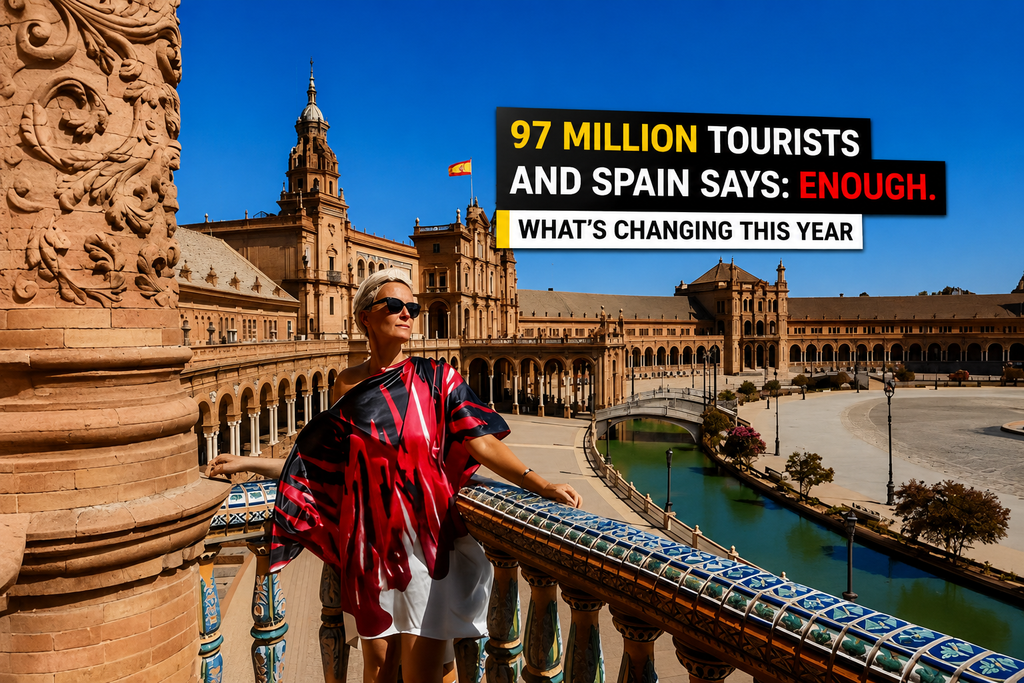
This is where it gets practical. Several regions have raised or are raising their overnight visitor surcharges, and the numbers matter for anyone budgeting a trip.
| Region | Previous nightly tax | 2026 rate | Notes |
| Barcelona (4–5 star hotels) | €3.25 | €6.75 | Cruise passengers pay €8 flat per day |
| Balearic Islands | Variable | Up to €15 (peak season) | Peak deterrent rate under review |
| Canary Islands | None established | Increases drafted | Linked to green-mobility funding |
| Valencia | Low | Increases pending | Regional parliament vote expected |
A two-week stay in a Barcelona four-star hotel now carries roughly €95 in tourism levies alone — before you’ve paid for a single meal or museum ticket. That’s not devastating, but it’s real money, and most American travelers don’t see it flagged on booking sites until checkout.
Entry rules tightened for US travelers
Beyond the taxes, entry requirements for non-EU visitors — including Americans — have been updated.
What you now need at the Spanish border:
- A passport valid for at least three months beyond your planned departure date
- Proof of travel insurance
- A return or onward ticket
- Evidence of sufficient funds for your stay
- Confirmed accommodation bookings (or a carta de invitación if staying with locals)
The European Travel Information and Authorization System (ETIAS) — an electronic pre-authorization similar to the US ESTA — is expected to launch in 2027. It won’t be required this year, but travelers should monitor updates.
The cities that are actively capping tourism
Not all of Spain is equally affected. Here’s a clear picture of where restrictions are tightest right now and what that means on the ground.
| City / Region | Key restriction | Status |
| Barcelona | New sustainable tourism commissioner; tourist apartment phase-out by 2028; higher taxes | Active |
| Mallorca | Anti-tourism protests; rental caps; eco-tax increases | Active |
| Canary Islands | 100,000 fewer international arrivals in April 2026 vs prior year | Declining by policy intent |
| Málaga | Housing regulations limiting new tourist flat licenses | Active |
| Valencia | New housing rules for tourist apartments (May 2026) | Active |
Barcelona is the most aggressive. The city has appointed its first-ever commissioner for sustainable tourism and is phasing out 10,000 short-term rental licenses by 2028. If you’re planning to stay in an Airbnb in the Gothic Quarter, that option is shrinking fast.
Spain tourism: what hasn’t changed
It’s worth being honest about what this coverage can miss. Spain is not closing. It is not hostile to tourists. Ninety-seven million people visited last year and the overwhelming majority had no problems.
The restrictions are targeted — aimed at platforms, landlords, and cruise operators, not individual travelers. The new taxes are modest compared to what travelers pay in cities like Tokyo or Dubai. The ETIAS, when it arrives, will be a simple online form, not a visa interview.
What’s changing is the margin. Spain is trying to shift from volume to value — fewer visitors spending more, staying longer, exploring beyond the obvious hotspots. That’s actually good news for Americans who want a richer, less crowded experience.
Where Spain wants you to go instead
The government’s strategy involves steering tourists toward lesser-known regions. If you want to get ahead of the crowds and potentially benefit from lower prices and warmer local reception, these are the areas being promoted:
- Murcia — golf, coastline, and almost no overtourism pressure
- Sierra de la Demanda — inland hiking, medieval villages, almost no foreign visitors
- Extremadura — Roman ruins at Mérida, cork forests, empty roads
- Asturias and Cantabria — green coast, cider culture, dramatically undervisited
Spain’s domestic and international marketing is actively pivoting to these regions. Getting there now, before the crowds follow, is the real opportunity.
How Spain compares to other overtourism hotspots
Spain is not alone in this. The pattern is global. Travelers who follow spain tourism news today will notice it mirrors what’s happening elsewhere.
Japan — particularly Kyoto and its surrounding prefectures — has introduced barriers at popular viewpoints, charged entry fees to previously free areas, and restricted bus access to Arashiyama during peak hours. The UAE, specifically Dubai, has taken the opposite approach, investing in infrastructure to absorb more visitors rather than cap them.
Spain sits between those two models: it wants the economic benefit Dubai captures, but it’s facing the community friction Japan is managing. The outcome is this hybrid policy — raise taxes, cap rentals, redirect flows — rather than a hard limit on arrivals.
Quick-reference: Spain travel checklist for US visitors in 2026
| Item | Status |
| Visa required for US citizens | No (up to 90 days) |
| ETIAS pre-authorization | Not yet (expected 2027) |
| Travel insurance required | Yes, at border |
| Tourist tax in Barcelona | €6.75/night (4–5 star) |
| Short-term rentals in Barcelona | Shrinking; check license status before booking |
| Best alternative regions | Murcia, Extremadura, Asturias |
| Peak season to avoid for crowds | July–August in coastal hotspots |
The bottom line
Spain news is not a warning to stay home. It’s a prompt to plan smarter. The country is restructuring its relationship with mass tourism — slowly, imperfectly, with a lot of political noise — but the direction is clear. Higher costs in the popular cities, more breathing room in the overlooked ones, and a genuine push toward travelers who stay longer and spend more thoughtfully.
If you’re planning a trip, book accommodation through licensed operators, budget for the new levies, get your travel insurance sorted before you fly, and seriously consider going somewhere most Americans haven’t heard of. That’s where Spain is actually trying to send you — and right now, it’s still worth listening.